STIHL MSA 300 chain saws
Class III - Low RiskWhat Should You Do?
- Check if you have this product: (About 2,800)
- Do not eat it: Even if it looks and smells fine, do not consume this product.
- Throw it away or return it: You can return the product to the store for a full refund.
- Report problems: Report any issues to the FDA's Safety Reporting Portal.
Recall Details
- Company:
- Unknown Manufacturer
- Reason for Recall:
- The chain saw can take longer to brake than expected, posing a laceration hazard.
- Classification:
- Class III - Low Risk
Products that are unlikely to cause any adverse health reaction, but violate FDA regulations.
- Status:
- ongoing
- Hazard:
- The chain saw can take longer to brake than expected, posing a laceration hazard.
- Remedy:
- Consumers should immediately stop using the recalled STIHL MSA 300 chain saw and bring it to an authorized STIHL servicing dealer for the free replacement of the brake drum and brake band.
Product Images
Product Information
Full Description:
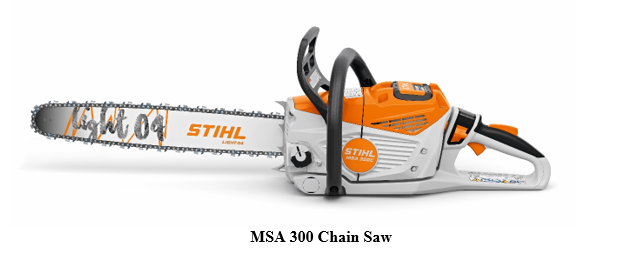
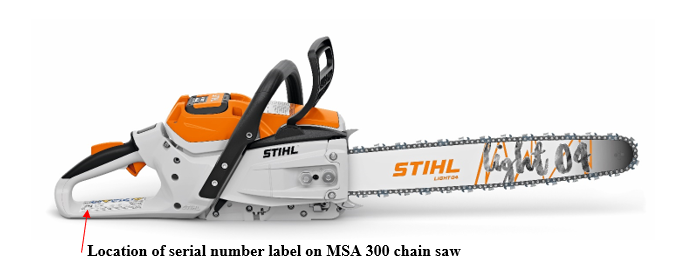
This recall involves the braking system of the STIHL MSA 300, a battery-powered chain saw. The chain saw is gray and orange. "STIHL" and "MSA 300" are displayed on the side of the chain saw. The recalled chain saw's serial number is located on a label on the rear hand guard. Serial numbers lower than 447457319 are included in the recall.
Product Codes/Lot Numbers:
(About 2,800)
Official Source
Always verify recall information with the official CPSC source:
View on CPSC.govCPSC Recall Number: 23282
Related Recalls
Scotch™ Thermal Laminators
Unknown Manufacturer
The recalled thermal laminators can overheat, posing a fire hazard.
Blitz and Blitz 777 air rifles
Unknown Manufacturer
The recalled air rifles can fire unexpectedly when releasing the bolt before the air rifle is fully cocked, posing a risk of serious injury or death from projectile hazard.
Crystal Glass Cups with Loose Crystal Chips
Unknown Manufacturer
Glass can break inside the recalled cups while in use, posing a risk of serious injury from ingestion and laceration hazards.