Kidde Model PI2000 Dual Sensor Smoke Alarms
Class I - DangerousWhat Should You Do?
- Check if you have this product: (About 94,000)
- Do not eat it: Even if it looks and smells fine, do not consume this product.
- Throw it away or return it: You can return the product to the store for a full refund.
- Seek medical attention if needed: If you've consumed this product and feel unwell, contact your doctor immediately.
- Report problems: Report any issues to the FDA's Safety Reporting Portal.
⚠️ Emergency: If you experience severe symptoms after consuming this product, call 911 or Poison Control at 1-800-222-1222.
Recall Details
- Company:
- Walter Kidde Portable Equipment Inc., of Mebane, N.C.
- Reason for Recall:
- An electrostatic discharge can damage the unit, causing it not to warn consumers of a fire.
- Classification:
- Class I - Dangerous
Dangerous or defective products that predictably could cause serious health problems or death.
- Status:
- ongoing
- Hazard:
- An electrostatic discharge can damage the unit, causing it not to warn consumers of a fire.
- Remedy:
- Consumers should contact Kidde immediately to receive a free replacement smoke alarm.
Product Images
Product Information
Full Description:
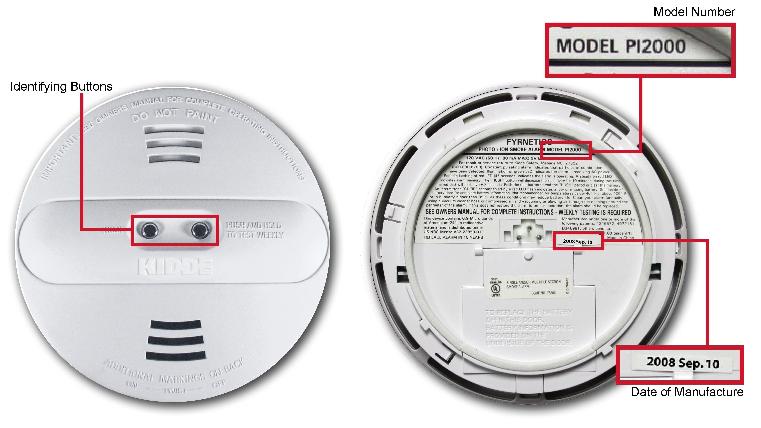
This recall involves Kidde dual sensor smoke alarms model PI2000. The alarms can be identified by two buttons, "HUSH" and "PUSH AND HOLD TO TEST WEEKLY," which are located on the front/center of the alarm. The model number and date code are on the back of the smoke alarm. Only date codes 2008 Aug.01 through 2009 May 04 are included in this recall.
Product Codes/Lot Numbers:
(About 94,000)
Official Source
Always verify recall information with the official CPSC source:
View on CPSC.govCPSC Recall Number: 09266
Related Recalls
Kidde 10 lb. industrial dry chemical fire extinguishers with black plastic Zytel® nylon valves in steel cylinders manufactured between 1991 and 2000
Walter Kidde Portable Equipment Inc., of Mebane, N.C.
The nylon valves on these extinguishers can separate from the steel cylinder during the 6-year recharge service or shortly afterwards, creating a safety hazard to fire extinguisher service personnel and consumers.