Extension Cords
Class I - DangerousWhat Should You Do?
- Check if you have this product: (About 42,000)
- Do not eat it: Even if it looks and smells fine, do not consume this product.
- Throw it away or return it: You can return the product to the store for a full refund.
- Seek medical attention if needed: If you've consumed this product and feel unwell, contact your doctor immediately.
- Report problems: Report any issues to the FDA's Safety Reporting Portal.
⚠️ Emergency: If you experience severe symptoms after consuming this product, call 911 or Poison Control at 1-800-222-1222.
Recall Details
- Company:
- Unknown Manufacturer
- Reason for Recall:
- The counterfeit extension cords have undersized wiring and no fuse in the cord to provide over-current protection, which can cause overheating and pose a fire hazard.
- Classification:
- Class I - Dangerous
Dangerous or defective products that predictably could cause serious health problems or death.
- Status:
- ongoing
- Hazard:
- The counterfeit extension cords have undersized wiring and no fuse in the cord to provide over-current protection, which can cause overheating and pose a fire hazard.
- Remedy:
- Consumers should stop using the recalled extension cords immediately and return them to the place of purchase for a full refund.
Product Images
Product Information
Full Description:
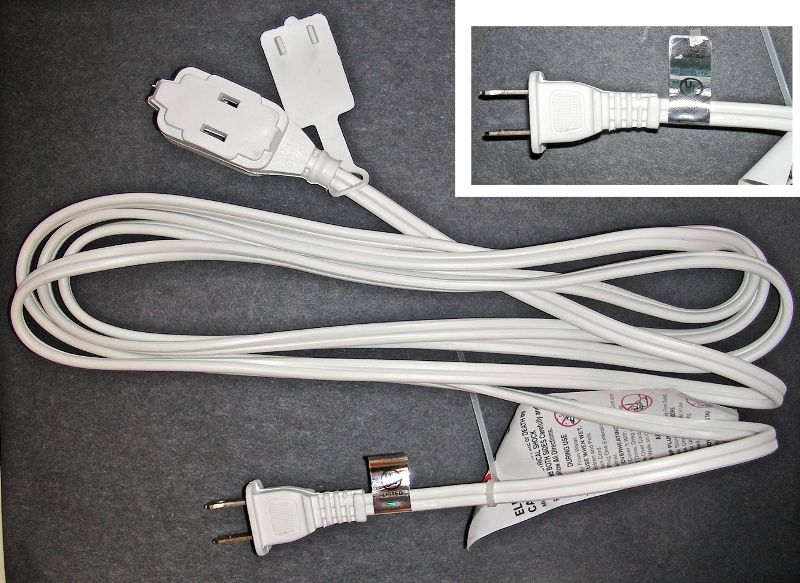
The recalled cords are brown or white, measure 6, 9, 12, or 15 feet long, are intended for indoors and have a three-outlet extension. Attached to the cord is a silver counterfeit UL holographic label marked "09/99 E157848 UL LISTED CORD SET BV-8021 13A 125V 1625W" or "09/02 E137398 UL LISTED CORD SET BW 5833 13A 125V 1625W."
Product Codes/Lot Numbers:
(About 42,000)
Official Source
Always verify recall information with the official CPSC source:
View on CPSC.govCPSC Recall Number: 06256
Related Recalls
Scotch™ Thermal Laminators
Unknown Manufacturer
The recalled thermal laminators can overheat, posing a fire hazard.
Blitz and Blitz 777 air rifles
Unknown Manufacturer
The recalled air rifles can fire unexpectedly when releasing the bolt before the air rifle is fully cocked, posing a risk of serious injury or death from projectile hazard.
Crystal Glass Cups with Loose Crystal Chips
Unknown Manufacturer
Glass can break inside the recalled cups while in use, posing a risk of serious injury from ingestion and laceration hazards.