Rope Candle
Class II - ModerateWhat Should You Do?
- Check if you have this product: (About 2,000)
- Do not eat it: Even if it looks and smells fine, do not consume this product.
- Throw it away or return it: You can return the product to the store for a full refund.
- Report problems: Report any issues to the FDA's Safety Reporting Portal.
Recall Details
- Company:
- Zhongshan Zhongnam Candle Manufacturer Co., Ltd. of China
- Reason for Recall:
- The candle has a clamp that is used to extinguish the candle. The clamp does not always sever the wax close to the wick and extinguish the candle as intended. This can allow the flame to continue down into the coiled section of the candle and ignite the entire candle.
- Classification:
- Class II - Moderate
Products that might cause a temporary health problem, or pose a slight threat of a serious nature.
- Status:
- ongoing
- Hazard:
- The candle has a clamp that is used to extinguish the candle. The clamp does not always sever the wax close to the wick and extinguish the candle as intended. This can allow the flame to continue down into the coiled section of the candle and ignite the entire candle.
- Remedy:
- Consumers should contact TechnoBrands Inc. to get information on receiving a full refund.
Product Images
Product Information
Full Description:
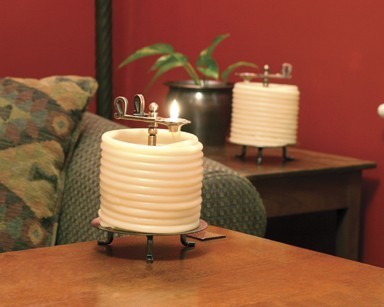
The rope candle is a 20-foot coiled beeswax candle that feeds up to a scissors-like clamp. The candle is lit above the clamp. The candle has an antique copper finish. It was sold under the name "Self-extinguishing Rope Candle."
Product Codes/Lot Numbers:
(About 2,000)
Official Source
Always verify recall information with the official CPSC source:
View on CPSC.govCPSC Recall Number: 05559
Related Recalls
Beeswax Rope Candle (SKU # 34-911)
Zhongshan Zhongnam Candle Manufacturer Co., Ltd. of China
The candle has a clamp (vise) that leads the end of the rope candle at the top. When clamped properly it is supposed to self-extinguish the candle when the burning wick meets the metal clamp (vise). The clamp (vise) does not always sever the wax close to the wick and does not always enable the wick to self-extinguish. This can lead to the flame continuing down into the coiled section of the candle, which can then ignite and cause fire damage.