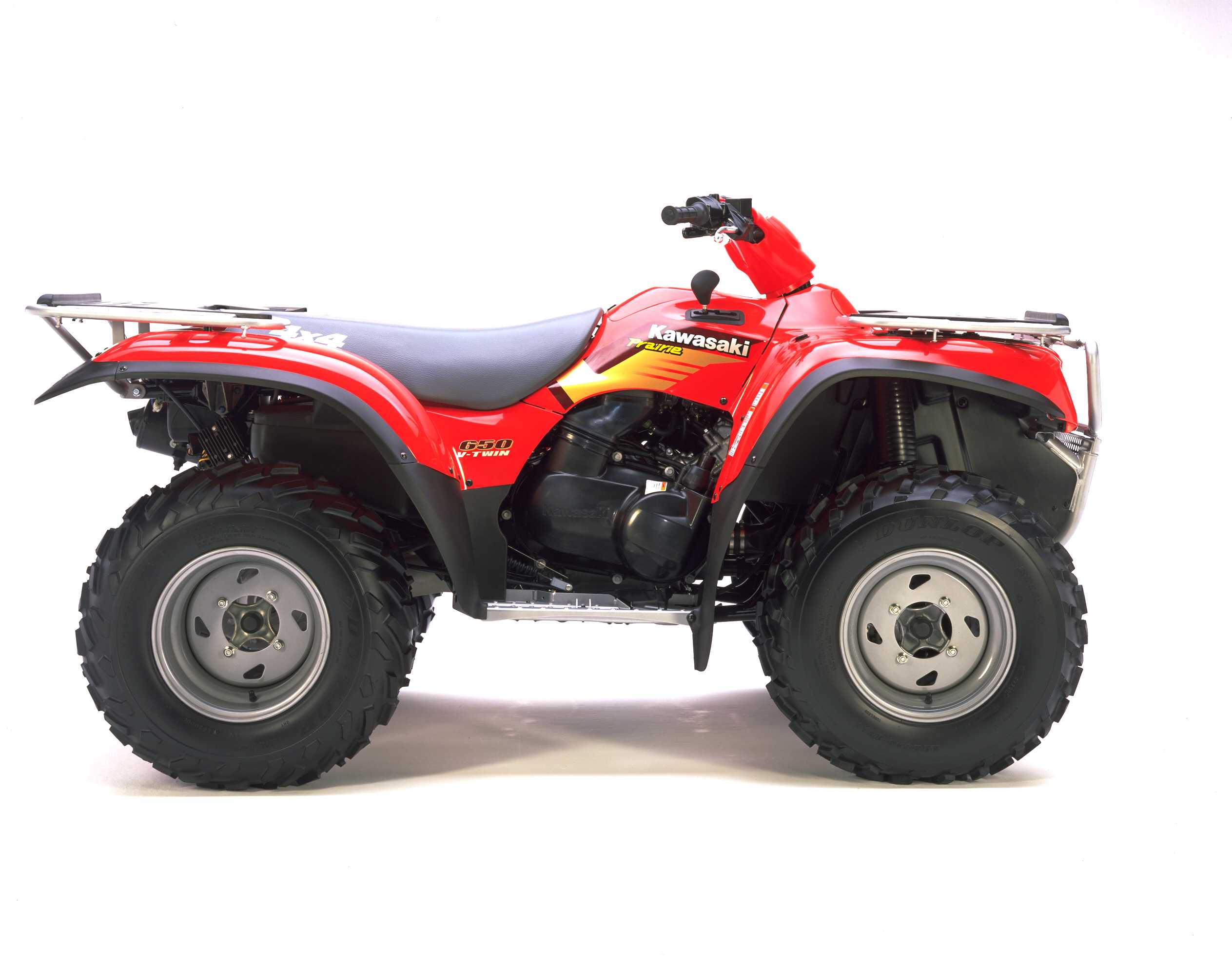
2002 model Kawasaki KV650 "Prairie" ATVs
Class II - ModerateWhat Should You Do?
- Check if you have this product: (About 790)
- Do not eat it: Even if it looks and smells fine, do not consume this product.
- Throw it away or return it: You can return the product to the store for a full refund.
- Report problems: Report any issues to the FDA's Safety Reporting Portal.
Recall Details
- Company:
- Kawasaki Motors Corp., U.S.A. (KMC) of Irvine, Calif.
- Reason for Recall:
- The rear axle on some of these units could have been incorrectly heat-treated. This could allow the rear axle to break, causing a loss of vehicle control and injury.
- Classification:
- Class II - Moderate
Products that might cause a temporary health problem, or pose a slight threat of a serious nature.
- Status:
- ongoing
- Hazard:
- The rear axle on some of these units could have been incorrectly heat-treated. This could allow the rear axle to break, causing a loss of vehicle control and injury.
- Remedy:
- Consumers should stop using these ATVs immediately and contact a local Kawasaki dealer to determine if the vehicle is part of the recall. Purchasers were sent direct mail notification of this recall.
Product Images
Product Information
Full Description:
The recall involves the 2002 model Kawasaki KV650 "Prairie" ATV. The ATV model has the identification "Kawasaki" and "Prairie" on both sides of the bodywork.
Product Codes/Lot Numbers:
(About 790)
Official Source
Always verify recall information with the official CPSC source:
View on CPSC.govCPSC Recall Number: 02511
Related Recalls
2003 Kawasaki "KFX50" All Terrain Vehicles (ATVs)
Kawasaki Motors Corp., U.S.A. (KMC) of Irvine, Calif.
There is the potential for failure of a weld securing the tie-rod plate to the steering column. If the weld fails, the plate can become detached from the steering column, resulting in a loss of steering control.
2002 Kawasaki "Bayou" ATVs
Kawasaki Motors Corp., U.S.A. (KMC), of Irvine, Calif.
The rear wheel hubs, in the case of the KLF220 and KLF300-B, and the front and rear wheel hubs of the KLF300-C, are held to their respective axles by a castellated nut, that is secured to the axle with a specified torque, then locked in place by a cotter pin. On a limited number of the affected models, the axle nut was not tightened to the proper torque before the cotter pin was inserted. The cotter pin or axle nut failure could cause the hub to come off of the axle shaft, creating the potential for an incident, resulting in injury or death to the rider.